

Topological Logic & Heritage
Why Procurement Teams Are Turning to Binary Mechanical Puzzles
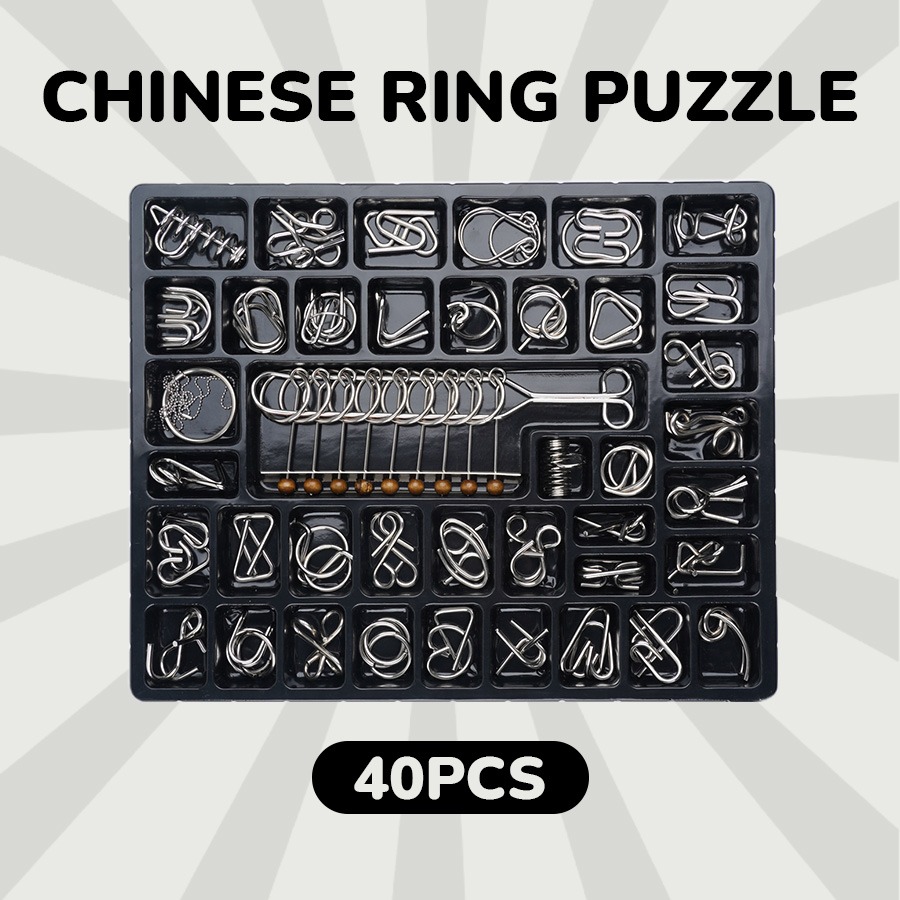
The Traditional Nine Linked Rings Puzzle, historically celebrated across East Asia as Jiulianhuan (九连环), represents one of humanity's earliest known mechanical puzzles. Documented extensively during the Song and Ming dynasties and analyzed by Western mathematicians since John Wallis in 1693, the puzzle consists of nine interlocking metal loops mounted perpendicularly onto upright posts anchored to an oblong frame. An elongated loop shuttle—termed the 'sword' or loop handle—traverses every ring simultaneously.
Unlike casual jigsaw assemblies or single-lock mechanisms, the Traditional Nine Linked Rings Puzzle requires an exacting sequence of 341 discrete, non-intuitive moves to fully release the shuttle. Its solution mirrors the reflected binary code (Gray code), making it an indispensable hands-on paradigm in contemporary STEAM curriculums, executive stress-relief retail, and high-end artisanal puzzle gifting collections.
For international supply chain managers and brand directors, sourcing high-grade nine linked rings puzzles provides substantial commercial advantages: exceptional dimensional density for containerized ocean and air freight, non-perishable lifecycle longevity, and an evergreen appeal that bridges young learners seeking algorithmic intuition and adults seeking therapeutic, screen-free tactile engagement.