
Precision Engineered Assemblies & STEM Models
Explore our export-grade educational suites, precision joinery architecture kits, and biomimetic robotics units tailored for international distributors and retail channels.





5,000,000+
Units Shipped Globally
0.3%
Defect Benchmark Rate
80%
EU & North America Share
~30 Days
Standard Lead Window
Engineering Architecture & Product Recommendations
A comprehensive procurement breakdown for B2B importers, curriculum developers, and private label distributors sourcing multi-legged robotic systems from China.
Kinematic Linkage & Motor Specifications
Commercial spider robot kits rely on either mechanical linkage gearboxes (Klann or Theo Jansen linkages) or independent multi-servo configurations (typically 8-DOF or 12-DOF using MG90S metal-gear digital servos). For low-cost educational toys, dual-axis DC motor gearboxes with an eccentric cam drive provide reliable biomimetic locomotion with minimal electronic failure risk. Importers should review the gear pitch tolerance and tooth depth in ABS/POM resins to prevent slippage during friction resistance tests.
Material Selection: POM, Polycarbonate & Beechwood
Durability issues in consumer-returned spider robot kits directly trace back to sub-par joint polymers. Aitoybots utilizes virgin POM (polyoxymethylene) for drive gears to guarantee cyclic fatigue strength up to 100,000 rotations. For hybrid wooden STEM models, high-density European beechwood or multi-layer basswood treated with eco-friendly non-toxic varnishes is CNC cut to within ±0.05mm tolerances, allowing perfect snap-fit integration without hazardous solvent adhesives.
Embedded Control & Programmable Architectures
For mid-tier and advanced academic robotics, the market has transitioned rapidly away from non-programmable receiver boards. Aitoybots integrates modular ESP32, Arduino Uno, or Raspberry Pi Pico compatible boards that feature onboard Bluetooth Low Energy (BLE) and Wi-Fi. This open-architecture enables institutional buyers to deploy graphical drag-and-drop programming (Scratch/Blockly) or native Python code for collegiate bio-robotics syllabi.
Procurement & Technological Evolution Trends
Strategic foresights on regulatory shifts, consumer demand patterns, and factory-floor technological migrations from 2025 to 2030.
Trend 1: Hybrid Wooden-Mechatronic Synthesis
The consumer pushback against 100% disposable plastic toys has created exponential demand for sustainable wood-encased robotics. Buyers are consolidating purchase orders toward suppliers capable of machining precision mortise-and-tenon structural chassis while seamlessly integrating brushless motors, modular PCBs, and ultrasonic obstacle avoidance systems.
Trend 2: Agile Tier-1 Sourcing & Flexible MOQs
E-commerce volatility and channel fragmentation require smaller test-lot acquisitions. Global brand managers are moving away from monolithic 5,000-piece single-SKU lock-ins toward suppliers offering factory-direct private labeling starting at 2 to 20 units. This approach preserves liquidity while validating real-time conversion rates across digital retail platforms.
Trend 3: Stringent Chemical & Micro-Battery Mandates
Customs enforcement of EU REACH Annex XVII, RoHS 3, and US CPSIA regulations regarding phthalates and hazardous heavy metals has tightened. Concurrently, new lithium battery transport directives (UN38.3, MSDS) necessitate spider robot kits that leverage either dry-cell battery compartments or pre-certified, fire-shielded lithium packs with comprehensive test reports.
Enterprise Strengths & Production Infrastructure
From our artisan woodworking roots in Jinhua founded in 2011 to high-throughput modern manufacturing in Hangzhou, Aitoybots blends traditional structural mastery with advanced international trade security.
Proven High-Volume Output
Over 5 million finished toys and kits shipped internationally, backed by 6-stage inline quality checkpoints resulting in a verified 0.3% defect record.
Sustainable Wood Engineering
Heirloom-grade craftsmanship utilizing FSC-certified timber and non-toxic aquatic coatings that seamlessly merge ancestral mortise structures with mechatronics.
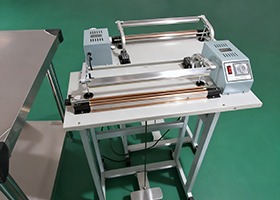
Built for Generational Play
Components undergo high-torque stress testing, drop impact simulations, and tensile pull experiments to prevent snapping during enthusiastic student assembly.

Full Supply Chain Assurance
Dedicated English-speaking technical account teams handle everything from rapid private-label prototype sampling to turnkey DDP maritime freight forwarding.
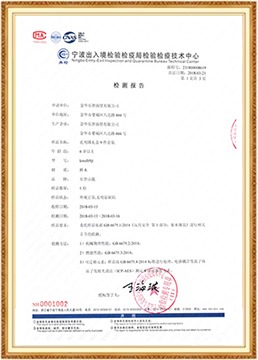 EN71 Mechanical & Chemical Certification
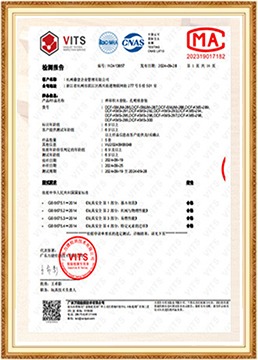 ASTM F963 Standard Safety Assurance
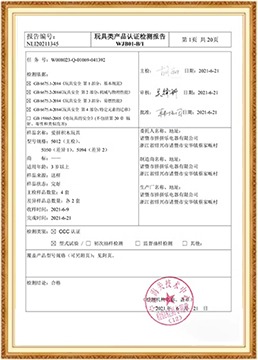 CE / RED Wireless Compliance
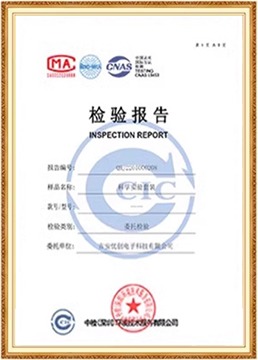 TÜV / ISO Factory Assessment Certified
Spider Robot Kit Procurement: Frequently Asked Questions
In-depth responses clarifying production tolerances, custom circuitry, safety standards, and logistical workflows for enterprise procurement teams.
What are the key technical differences between gearbox-driven and servo-driven spider robot kits?
Gearbox-driven spider robot kits utilize a central 3V–6V DC motor coupled with a multi-stage reduction spur gearbox. The rotational output transfers kinetic force to eight articulated legs via fixed mechanical link arms (Jansen-style mechanism), offering an economical, plug-and-play assembly ideal for elementary STEM education. In contrast, servo-driven hexapod or octopod kits incorporate 8 to 18 independent digital servos linked to an onboard microprocessor, enabling programmable multi-directional gait kinematics, balance stabilization, and custom posture manipulation.
How does Aitoybots ensure full compliance with international EN71 and ASTM F963 toy safety regulations?
Every assembly kit undergo rigorous third-party laboratory evaluations (SGS, Intertek, or TÜV). Our mechanical compliance ensures that small parts fail tensile and torque pull-tests without generating choking hazards under EN71-1. Chemically, raw ABS polymers and non-toxic solvent finishes adhere to ASTM F963-17 heavy metal total content thresholds (lead, cadmium, barium) and RoHS 3 / REACH restrictions on phthalate plasticizers. Testing documentation and Declaration of Conformity (DoC) certificates are provided alongside shipment bills of lading.
Can we customize the electronics, firmware, and retail packaging under an OEM/ODM contract?
Yes. We offer end-to-end OEM and ODM customization services. For hardware, we can customize PCB silkscreens, change MCU chipsets (e.g., swapping standard ATmega chips for ESP32 with built-in Wi-Fi/Bluetooth), and alter sensor suites (ultrasonic, infrared line-tracking, gyroscope). For branding, we provide die-cut templates for custom English 4-color printed gift boxes, multi-lingual pedagogical instruction booklets, and molded corporate logos on outer plastic chassis components. Typical tooling-to-sample turnaround spans 15 to 25 business days.
What is your Minimum Order Quantity (MOQ) and production turnaround for initial bulk orders?
Standard catalog products can be procured with low test MOQs starting at 2 to 20 units per SKU, allowing small businesses and specialized retailers to test marketplace velocity before scaling capital commitments. For fully customized private-label production runs (bespoke packaging, silkscreened logos, and custom injection-molded colorways), our MOQ typically begins at 500 to 1,000 units. Following client sign-off on pre-production golden samples, standard production turnaround is completed within approximately 30 days.
How are lithium polymer batteries handled for sea and air freight safety regulations?
Spider robot models incorporating rechargeable lithium polymer battery packs comply strictly with UN38.3 transport safety protocols, including thermal runaway, vibration, altitude simulation, and short-circuit impact tests. For international ocean and air freight, battery shipments are paired with valid MSDS files, certified UN-approved packaging with drop-rated outer master cartons, and compliant Class 9 Dangerous Goods warning labels. We also offer battery-free variants equipped with modular AA/AAA dry-cell battery enclosures to simplify customs clearances for lower compliance liability.
What quality control mechanisms are deployed on the assembly line to prevent defective units?
Our manufacturing facility enforces a 6-stage Quality Control system. Incoming raw materials (resins, laser-cut wood, motors, fasteners) undergo destructive sampling to verify structural purity and dimensional fidelity. During sub-assembly, individual micro-gearboxes and servos undergo continuous no-load burn-in testing for 15 minutes to flag torque deviations or excessive operating noise. Prior to carton sealing, complete kits are subjected to automated optical inspection (AOI) or high-precision weight checkweighers to verify zero missing screws, gears, or electronic modules.
Empower Your STEM Product Portfolio
Connect directly with our engineering division in Hangzhou. Receive comprehensive technical spec sheets, wholesale tiered volume quotes, and custom private-label prototyping timelines.
Get Catalog