Precision Engineered Mechanical & Biomimetic Assembly Models
Direct factory wholesale supply with rigorous dimensional tolerances, sustainable timber sourcing, and turnkey packaging customization.





The Convergence of Biomimetic Robotics & Precision Educational Toys
In the contemporary B2B educational and intelligent toy marketplace, the boundary between conventional playthings and precision biomechanical engineering has dissolved. Procurement directors, retail category buyers, and institutional supply chain officers are witnessing a pronounced market transformation: toy consumers no longer settle for static plastic molds or rudimentary battery-operated novelties. Instead, the global market demands biomimetic robot toys that synthesize the organic locomotion of living organisms with tangible mechanical curiosity, spatial assembly, and sustainable materials.
As an industry-leading OEM/ODM manufacturer established in 2011, Hangzhou Aitoybots Trading Co., Ltd. operates at the center of this technological paradigm. Originating from heritage woodworking workshops in Jinhua and expanding into sophisticated mechatronic engineering facilities, our operation merges time-honored mortise-and-tenon interlocking joinery with modern micro-actuator kinematics, bio-inspired linkage systems, and microprocessor-controlled bionics. Today, over 80% of our total factory output serves demanding commercial clients across Europe and North America, delivering end-to-end reliability, strict regulatory compliance, and unmatched shelf-appeal.
Information Gain: Defining Biomimetic Actuation in Modern Toy Manufacturing
The core technological value proposition of authentic biomimetic robot toys lies in the mathematical translation of natural locomotion into mechanical linkages. Whether emulating the multi-legged crawling gait of an arachnid, the lateral scuttling kinetics of an ocean decapod, or the multi-jointed articulation of avian flight, biomimetic engineering requires multi-disciplinary precision:
Kinematic Linkage Design
Utilizing closed-loop kinematic chains such as Klann and Chebyshev linkages to reproduce organic leg trajectories with minimal motor count, dramatically reducing bill-of-materials costs while maximizing operational lifespans.
Toleranced Wood-Polymer Hybridization
Synthesizing sustainable, laser-cut Baltic birch and FSC basswood structural plates with ultra-low friction polyoxymethylene (POM) gear trains, eliminating high-wear stress points and guaranteeing smooth motion below 42dB.
Modular Electronic Scalability
Direct architectural compatibility with infrared obstacle avoidance, sound-activated triggers, Bluetooth 5.2 micro-controllers, and solar-power conversion arrays tailored specifically for private-label brands.
Future Procurement Trends in Biomimetic Robotic Toys
Key procurement variables, supply chain dynamics, and regulatory benchmarks shaping global sourcing strategies over the coming fiscal cycles.
Global procurement teams operating in Europe, North America, and Australia face an increasingly complex sourcing matrix. Navigating the intersection between child safety compliance, carbon footprint reduction, and tech-driven play patterns requires a forward-looking procurement blueprint. The following four macro trends govern international sourcing for the 2025–2030 cycle:
1. Low-Entry MOQs for Agile Iteration
Modern omnichannel retailers and Amazon FBA volume sellers can no longer sustain massive container commitments on unverified toy concepts. The market favors suppliers like Aitoybots offering tiered entry MOQs starting at 2 to 20 units per SKU, allowing swift A/B test launches prior to capital-heavy mass container production.
2. Strict ESG & Non-Toxic Chemistry
Upcoming revisions to the EU Toy Safety Directive and USA ASTM F963 demand exhaustive tracking of volatile organic compounds (VOCs), formaldehyde resins in engineered woods, and the total eradication of per- and polyfluoroalkyl substances (PFAS). Sustainable natural timber finishes and recyclable packaging are now mandatory baseline prerequisites.
3. Physical-Digital ("Phygital") STEM Integration
B2B buyers are actively sourcing hybrid construction toys that integrate physical biomechanical assembly with graphical coding applications (Scratch/Python). Toys that serve a dual purpose as aesthetic desk sculptures and educational robotic demonstrators command premium wholesale margins.
| Product Architecture | Core Kinematic Mechanism | Structural Substrate | Power / Transmission Mode | Target Retail Channel | Compliance Baseline |
|---|---|---|---|---|---|
| Biomimetic Hexapod Spider | Klann Linkage Step Articulation | Laser-Crafted Beech + ABS Chassis | DC Micro-Gearbox (3V) / Solar Array | Science Centers, STEM Boutiques | EN71 / ASTM F963 / RoHS |
| Biomimetic Mechanical Crab | Reciprocating Lateral Scuttle Cam | Eco-Composite Basswood + POM | Kinetic Spring Winder / 1.5V AA | Hobbyist Outlets, Museum Stores | CE Mark, CPSIA Certified |
| Transformable Mech Robot | Bi-Axial Planetary Pivot Joint | High-Impact Polycarbonate Core | Manual Reversible Articulation | Department Chains, Online FBA | EN71 Parts 1-3, Reach Lead-Free |
| Kinetic Architectural Bookstand | Multi-Stage Rack & Pinion Interlock | FSC Natural Basswood Core | USB-C Ambient LED + Micro Drive | Adult Gift Stores, Lifestyle Boutiques | EMC Directive / FCC Part 15B |
Technological Evolution: From Mechanical Clockwork to Adaptive Bionics
A technical assessment of how Chinese manufacturing hubs are driving innovation across biomimetic robotics, precision actuation, and sustainable materials.
Historically, educational robotic toys manufactured in East Asia were constrained to rigid, injection-molded chassis driven by single-axis DC motors with loud, brittle spur gears. Over the past decade, rapid advances in CNC micromilling, ultra-precise laser cutting with carbon-free edges, and low-cost brushless actuators have revolutionized the sector.
Hangzhou Aitoybots' dedicated R&D team analyzes biological organisms to isolate efficient biomechanical motion vectors. For example, our signature Biomimetic Mechanical Crab Series employs a dual-eccentric wheel assembly synchronized with multi-segmented walking appendages. This configuration mimics the decapod's center of gravity shifts, enabling traversal over uneven desktop surfaces without electronic gyroscopes. This mechanical elegance reduces production costs by up to 35% compared to multi-servo robotic platforms while offering superior durability and battery life.
Furthermore, our engineering team has solved the common industry challenge of wood expansion and binding caused by seasonal humidity shifts. By incorporating calibrated thermal-expansion joints and proprietary biological wax coatings onto all interlocking tenons, our wooden kinetic kits operate smoothly across extreme environmental conditions—from arid warehouse storage to humid coastal retail environments.
Why International Brands Choose Hangzhou Aitoybots
Fourteen years of woodworking heritage combined with high-precision modern robotics engineering and world-class quality assurance.
Precision CNC & Laser Milling
Micron-level cut tolerances guarantee zero-splinter interlocking joints without adhesive.
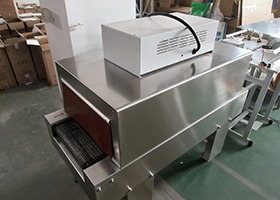
Eco-Timber Sourcing & Treatment
FSC-certified timber conditioned to precise equilibrium moisture content for dimensional stability.
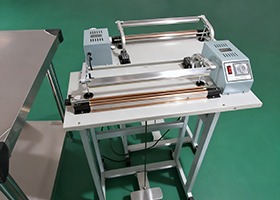
Dust-Free Sub-Assembly Cells
Specialized clean lines for electronic integration, solder testing, and sensor calibration.

6-Stage Stringent Quality Control
100% full-function inspection ensures our industry-leading defect rate below 0.3%.
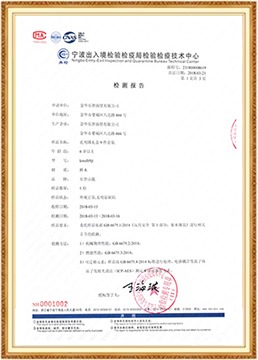
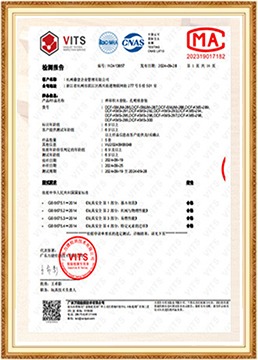
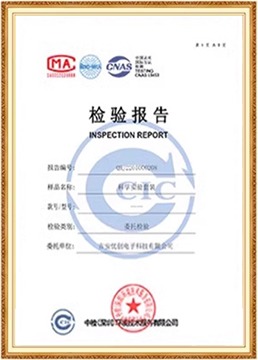
Accredited Safety & Laboratory Test Reports

Speak Directly With Your Project Management Team






Frequently Asked Questions by Global Toy Importers
Essential guidance on minimum order quantities, custom tooling, international compliance certificates, and production lead times.
What is your minimum order policy for wholesale orders versus private-label OEM?
For existing catalog items in our standard branded packaging, our entry minimum order quantity (MOQ) starts at just 2 to 20 units per SKU. This flexible policy enables boutique retailers, museum gift shops, and Amazon FBA sellers to assess localized sell-through without risking substantial capital. For full private-label OEM/ODM projects requiring customized packaging, laser-engraved corporate branding, bespoke colorways, or tailored instruction manuals, the typical threshold is 500 units per SKU, with volume discount tiers starting at 2,000 units.
How do your biomimetic robot toys comply with EU and US safety mandates?
Every single product manufactured in our facility undergoes rigorous accredited testing through third-party laboratories (such as SGS, TÜV, and Intertek) to ensure total alignment with the European EN 71 standards (Parts 1, 2, and 3) and US ASTM F963-23 requirements. Our timber raw materials are fully compliant with formaldehyde emissions limits (CARB Phase 2 / EPA TSCA Title VI), all electronic components adhere to the RoHS Directive, and all plastics and paints are rigorously screened for phthalates, cadmium, and lead. Full test reports with traceable batch numbers are shared with your buying team during quotation.
What is the typical production timeline from sample sign-off to port departure?
For in-stock catalog models, order fulfillment and carton palletization require only 3 to 7 business days. For customized production runs (private packaging or minor mechanical modifications), our standard manufacturing lead time is approximately 25 to 35 days following rapid sample sign-off. For ground-up ODM projects requiring new kinematic tooling, injection mold fabrication, and electronic firmware development, the turnkey prototyping and tooling cycle typically spans 45 to 60 days before mass pilot runs commence.
Can you assist with direct DDP logistics and customs documentation?
Yes. We provide complete FOB (Ningbo or Shanghai), CIF, and turnkey Delivered Duty Paid (DDP) logistics solutions directly to our clients' regional distribution hubs across North America, the UK, Europe, Australia, and East Asia. Our dedicated export logistics team oversees export customs declarations, EUR.1 / Certificate of Origin paperwork, bill of lading documentation, and commercial invoices formatted precisely for seamless entry into target domestic markets.
How does Aitoybots maintain a 0.3% defect rate on intricate kinematic wood models?
Our quality assurance program is built on an uncompromising 6-stage industrial protocol. This includes: (1) incoming moisture and grain integrity testing of raw timber sheets, (2) automated high-precision laser kerf calibration every 100 operating hours, (3) mechanical gear meshing and torque tolerance bench tests, (4) environmental stress testing for humidity and heat variations, (5) manual pre-assembly spot checks of tenon fit tightness, and (6) final carton drop-test inspections in compliance with ISTA 1A standards. Any part failing friction or structural tolerance benchmarks is rejected prior to packaging.
Accelerate Your Robotic Toy Line With Direct Factory Pricing
Request comprehensive wholesale catalogs, physical pre-production samples, or customized OEM/ODM project feasibility studies within 24 hours.