Sourcing wooden toys from global suppliers requires more than comparing catalog prices. Demand is rising for tactile, screen-free, and open-ended play products. Grand View Research’s 2024 Wooden Toys Market report identifies growing interest in natural materials, developmental play, and sustainable product positioning. Circana’s 2024 toy market updates also highlight the continuing importance of value, quality, and play experience in purchasing decisions. These trends create opportunity, but they do not guarantee safe or profitable sourcing.
The practical work begins with supplier verification. Request factory addresses, production photographs, material specifications, and recent test reports. Then inspect samples closely. A smooth wooden block should have rounded corners, even paint, tight joints, and no loose splinters. Check whether the supplier can consistently reproduce these details at scale. Ask about wood origin, coatings, packaging, quality-control checkpoints, and independent laboratory testing. A polished website proves very little.
Richard Gottlieb, founder of Global Toy Experts, describes the sector simply: “The toy business is a business of passion.” That passion still needs disciplined purchasing. Compare at least three suppliers, document every specification, and calculate freight, sampling, testing, tariffs, and defect allowances. Certification requirements vary by destination, so confirm current rules with qualified testing professionals before placing an order. Reports may show attractive market growth, yet market forecasts differ by methodology. They are useful direction, not certainty. Your first sample may disappoint. Good. It exposes problems before a large shipment does. This guide explains how to evaluate wooden toys suppliers, control quality, reduce avoidable risk, and build a dependable sourcing process.
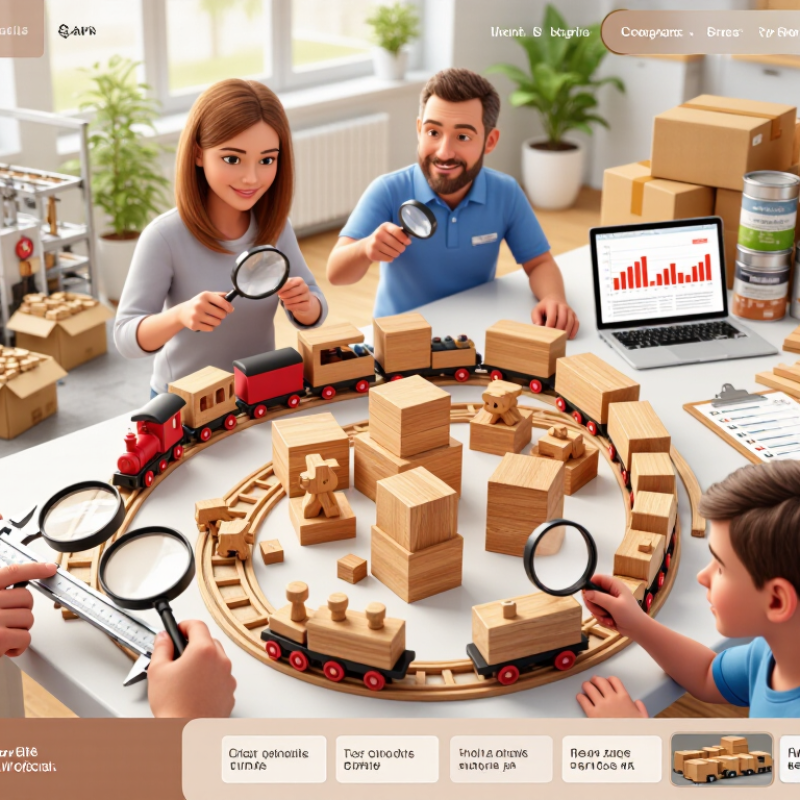
When sourcing wooden toys globally, define the product before comparing supplier prices. Specify the toy’s age range, dimensions, wood species, weight, moving parts, and intended use. A simple drawing can prevent costly misunderstandings. Include tolerances, surface texture, color references, and packaging details. Small details matter.
Safety requirements should match the destination market, not the supplier’s location. Check applicable toy regulations, including rules for small parts, sharp edges, coatings, heavy metals, and flammability. Ask whether paints, stains, adhesives, and finishes have supporting test reports. Requirements such as EN 71 or ASTM F963 may apply, but confirm the current version and local scope. Do not treat a supplier’s old certificate as permanent proof. Standards change, and paperwork can be incomplete.
Request a pre-production sample and inspect it by hand. Roll the toy across a table, pull attached parts firmly, and check for splinters around drilled holes. Measure key components against the approved drawing. Use an independent laboratory for relevant safety testing before mass production.
Keep test reports, material declarations, batch numbers, and inspection photos in one traceable file. I have seen specifications become too ambitious when cost pressure rises. A smaller design may be safer and easier to control, but that trade-off needs careful review. Keep records.
When identifying global wooden toy suppliers, compare evidence rather than attractive catalog photos. Grand View Research estimated the wooden toys market at about USD 27.1 billion in 2023. However, market definitions vary. Treat that figure as directional, not absolute.
Build a supplier scorecard with six fields: material traceability, production capacity, testing records, defect rate, lead time, and landed cost. Ask for recent test reports covering applicable toy-safety requirements, such as EN 71, ASTM F963, or ISO 8124. Request photos of sanding stations, paint storage, carton labels, and batch records. Small details matter. A rough edge can become a returned order. Compare at least three factories using identical specifications. Include wood species, moisture range, coating type, dimensions, packaging, and acceptable quality limits.
The International Trade Centre’s Trade Map uses HS 9503 data to compare international toy exports, but this code includes more than wooden toys. Use it as a trade-flow reference, not a supplier-quality measure. Freight data also deserves attention. The World Bank’s 2023 Logistics Performance Index shows clear differences in customs and delivery reliability among exporting markets. In practical sourcing work, I have seen low unit prices lose their advantage after port delays and rework. A spreadsheet can still lie. Supplier audits should test production samples, not only documents. I would also score communication speed, because unclear answers before sampling usually become expensive changes after production.
This comparison uses 2023 export values for HS 9503.00, “toys, reduced-size models and similar recreational models,” as a customs-based proxy for the broader toy-supply market. Wooden toys are not separately identified in this HS code, so the figures should be used to compare manufacturing ecosystems rather than individual suppliers.
How to use this chart: Higher export value can indicate greater production capacity and established logistics networks. Before selecting a supplier, also verify wooden-material sourcing, FSC or equivalent certification, product safety compliance, minimum order quantity, lead time, and quality-control procedures.
Source: UN Comtrade, HS 9503.00 export data for 2023; values are rounded estimates in billions of U.S. dollars.
When sourcing wooden toys, verify the supplier before reviewing the catalog. Request business registration, factory ownership details, export history, and recent production records. A polished website proves little. I once treated a complete certificate folder as strong evidence, but several documents carried unclear laboratory details. That mistake is easy to repeat.
Ask for test reports linked to the exact toy, material, paint, and production batch. The laboratory should hold ISO/IEC 17025 accreditation. Check testing against applicable requirements, such as EN 71, ASTM F963, or ISO 8124. Pay close attention to paint migration, heavy metals, small parts, sharp edges, and pull strength. The U.S. Consumer Product Safety Commission reported an estimated 231,700 toy-related injuries among children in 2023. That figure makes physical testing more than paperwork.
Quality control should be visible on the factory floor. Inspect moisture levels in wood, sanding quality, joint strength, coating consistency, and carton protection. Request pre-production samples and conduct random inspections before shipment. The EU Safety Gate 2023 report listed toys among its most frequently notified product categories, representing roughly 13% of alerts. Keep batch codes, inspection photos, corrective-action records, and shipping documents together. Suppliers may resist repeated checks. That hesitation itself deserves investigation. Even experienced buyers miss defects when sampling is too small or rushed.♀♀♀♀♀♀
| Verification Dimension | What to Verify | Relevant Requirement or Reference | Recommended Evidence | Verification Method | Priority | Acceptance Criteria |
|---|---|---|---|---|---|---|
| Legal Business Identity | Registered legal entity, operating address, production address, export authorization, and authorized contact person. | Applicable company-registration and export regulations in the supplier’s jurisdiction. | Current registration certificate, factory address records, export documents, and signed company profile. | Cross-check the legal name and address across registration records, contracts, invoices, and bank documents. | Critical | All legal details are consistent, current, and traceable to the contracting entity. |
| Manufacturing Capability | In-house production capacity, woodworking equipment, finishing process, assembly controls, and monthly capacity. | Product specifications, purchase-order requirements, and agreed production capacity. | Factory questionnaire, equipment list, process flow chart, capacity statement, and recent production records. | Conduct a live video audit or independent on-site inspection; compare stated capacity with actual equipment and staffing. | High | Capacity is sufficient for the forecasted order volume without relying on undisclosed subcontractors. |
| Quality Management System | Incoming-material inspection, in-process checks, final inspection, nonconformance handling, and corrective-action procedures. | Documented quality procedures aligned with the buyer’s specification and inspection plan. | Quality manual, inspection forms, defect records, calibration records, and corrective-action reports. | Review records from recent lots and verify that inspection results are linked to batch or order numbers. | High | Quality checks are documented, repeatable, and applied before shipment. |
| Toy-Safety Standard | Mechanical, physical, flammability, migration, and other toy-safety requirements for the destination market. | EN 71 for applicable European-market toys; ASTM F963 for applicable United States-market toys; ISO 8124 as an international reference framework. | Test report issued for the same or technically equivalent product, material, age grade, and production site. | Confirm the standard version, test scope, sample identity, manufacturing site, and report validity with the testing laboratory. | Critical | Every target market is covered by the applicable current requirements before commercial shipment. |
| Small Parts and Choking Risk | Detachable components, beads, wheels, knobs, magnets, plugs, and parts that may become accessible after foreseeable use or abuse. | Applicable small-part and accessibility requirements under the destination market’s toy-safety rules. | Small-parts test records, abuse-test results, component drawings, and age-grade assessment. | Review prototype and production samples; perform pull, torque, drop, and accessibility checks as applicable. | Critical | No prohibited or hazardous detachable part is accessible for the intended age group. |
| Wood Selection and Treatment | Wood species, moisture content, structural condition, pest treatment, knots, splits, sharp edges, and contamination risk. | Buyer specification, applicable phytosanitary rules for wood packaging, and toy-safety requirements. | Material specification, supplier declaration, moisture records, treatment records, and lot traceability. | Inspect incoming wood and finished products; verify that treatment chemicals are not used in a way that conflicts with toy safety. | High | Wood is stable, free from dangerous defects, appropriately dried, and traceable to its material lot. |
| Paints, Varnishes, and Adhesives | Coating type, colorants, heavy-metal content, solvent residues, adhesion, flaking, and adhesive safety. | Applicable toy-safety chemical limits; REACH requirements may apply to products placed on the European market. | Safety data sheets, formulation or restricted-substance declarations, coating supplier information, and laboratory reports. | Match test samples and production materials to the approved bill of materials; test finished surfaces where required. | Critical | Only approved materials are used, and coating does not peel, chip, or create an accessible chemical hazard. |
| Chemical Compliance | Restricted substances in wood, coatings, plastics, metals, textiles, adhesives, packaging, and printed components. | Destination-market chemical regulations, including applicable REACH restrictions and consumer-product chemical limits. | Recent third-party chemical test reports, supplier declarations, safety data sheets, and restricted-substance list. | Check testing frequency, laboratory competence, sample identity, detection limits, and material changes. | Critical | Results meet all applicable substance limits for the destination market and product configuration. |
| Traceability | Ability to trace finished toys to raw materials, coating batches, production dates, operators, inspections, and shipment lots. | Contractual traceability requirements and applicable product-safety recall obligations. | Batch-code system, production logs, bills of materials, carton marks, and shipment records. | Select a finished unit and trace it backward to material lots and forward to shipped cartons. | High | Affected products can be identified and isolated quickly if a defect or regulatory issue occurs. |
| Factory and Social Compliance | Worker safety, working hours, wages, age verification, forced-labor controls, fire safety, and subcontracting practices. | Applicable labor laws, buyer code of conduct, and destination-market supply-chain requirements. | Social-audit report, corrective-action plan, employment-policy records, and subcontractor declaration. | Use an independent audit and confidential worker interviews; verify closure of critical findings. | High | No unresolved critical violation, undisclosed production site, or prohibited labor practice is identified. |
| Sustainable Wood Claims | Whether wood is legally sourced, recycled, or sourced from a certified responsible-forestry supply chain. | Applicable timber-legality laws and any certification claim used for the product or packaging. | Valid chain-of-custody documentation, supplier claim records, species information, and purchase records. | Verify certificate scope, validity, product category, and transaction records through the relevant certification system. | Standard | Environmental claims are specific, documented, and supported by a traceable supply chain. |
| Product Specification Control | Dimensions, tolerances, age grading, color references, component list, packaging, instructions, and warning labels. | Approved technical drawing, golden sample, purchase order, and destination-market labeling rules. | Signed specification sheet, approved sample, bill of materials, artwork approval, and change-control log. | Compare pre-production and production samples against the signed specification using documented measurements. | Critical | Production matches the approved sample and all required warnings and instructions are accurate and legible. |
| Pre-Shipment Inspection | Appearance, dimensions, function, assembly, packaging, labeling, quantity, and random defect rate. | Agreed inspection level, acceptance quality limit, defect classification, and purchase-order requirements. | Independent inspection report with photographs, sample size, defect count, and lot identification. | Inspect a representative random sample after production is substantially complete and before shipment. | Critical | Shipment is released only when critical defects are absent and major/minor defects remain within agreed limits. |
| Packaging and Transport | Protection from impact, moisture, abrasion, deformation, contamination, and unsafe packaging components. | Packaging specification, transport test requirements, and applicable packaging-material regulations. | Packaging drawing, carton test record, pallet plan, moisture-control procedure, and shipping marks. | Perform packaging review, drop or compression testing where appropriate, and container-loading inspection. | High | Products arrive undamaged, dry, identifiable, and packed in accordance with the approved shipping plan. |
| Documentation and Market Access | Declaration of conformity or equivalent compliance file, technical documentation, test reports, labels, and records retention. | Destination-market product-safety, labeling, customs, and record-retention obligations. | Compliance file, declarations, laboratory reports, label artwork, user instructions, and product photos. | Review the complete file before the first order and whenever the design, materials, factory, or target market changes. | Critical | Required records are complete, internally consistent, accessible, and retained for the legally required period. |
| Change Management | Changes to wood species, coatings, adhesives, components, tooling, factory location, subcontractors, or packaging. | Contractual change-notification procedure and applicable product-compliance obligations. | Change-request form, revised bill of materials, reapproval record, and updated test assessment. | Require written approval before any material or process change; repeat testing when risk or regulations require it. | High | No unapproved change enters production, and compliance evidence remains valid after approved changes. |
| Practical sourcing rule: Approve a supplier only after legal identity, factory capability, product safety, chemical compliance, traceability, and pre-shipment controls have been verified for the exact product and destination market. Test reports should correspond to the same product design, materials, manufacturing site, and production configuration—not merely to a similar item. | ||||||
How to Source Wooden Toys from Global Suppliers?
Samples are the first serious test of a wooden toy supplier. Request three units from the same production batch, not showroom pieces. Check wood grain, moisture, sanding quality, paint coverage, and joint strength. A polished sample proves little. Ask for one unfinished sample too. It exposes cutting accuracy and surface preparation. Record every defect with photographs, measurements, and revision dates.
Circana’s 2023 Global Toy Industry Retail Sales Report valued worldwide toy sales at approximately $108.7 billion. It also reported a 7% sales decline, making cost control and consistent quality increasingly important. Compare each supplier’s sample cost, tooling charge, minimum order quantity, and replacement policy. Then inspect manufacturing evidence. Review equipment lists, daily capacity, worker training, in-process checks, and batch traceability. ISO’s 2023 survey recorded more than 1.5 million ISO 9001 certificates globally, but certification alone does not guarantee reliable toy production.
Ask suppliers to explain their testing process for coatings, small components, sharp edges, and load-bearing parts. Request recent test reports from an independent laboratory, with matching product codes. Confirm that the tested sample matches the final design. Visit the factory when possible, or arrange a live video walkthrough of cutting, sanding, painting, assembly, and packing areas. I would also place a small pilot order before scaling. This costs more initially, but a sample can hide production weaknesses. That is where my judgment may fail. Suppliers should welcome difficult questions, not only display clean photographs.
A clear negotiation prevents costly surprises. Request a detailed quotation covering unit price, minimum order quantity, tooling, packaging, and payment milestones. Confirm wood species, paint type, dimensions, weight, and acceptable color variation. Approve a physical sample before production begins. Put every agreed detail into the purchase contract, including defect thresholds and replacement terms. Keep communication direct and documented.
Shipping needs its own plan. Ask how the supplier protects toys from humidity, scratches, and crushed corners. I prefer inner wrapping, strong cartons, and a moisture barrier for long ocean routes. Confirm the delivery term, port responsibilities, carton dimensions, and tracking process. Add buffer time for inspections and customs clearance. A cheap freight quote can become expensive after storage fees.
Inspecting the order is not optional. Use an independent inspector when distance prevents a factory visit. Check random cartons, paint coverage, loose parts, sharp edges, odor, dimensions, and packaging labels. Compare the production sample with the approved sample under consistent lighting. Record photos, carton numbers, and measured defects. I once focused too much on appearance and missed inconsistent packaging instructions. That mistake delayed warehouse handling. Use a written inspection checklist, but review it after every shipment. Suppliers improve when feedback includes evidence, not vague complaints.
Specify age range, dimensions, wood type, weight, moving parts, and intended use. Add a simple drawing. Small details prevent costly misunderstandings.
Match requirements to the destination market. Check small parts, sharp edges, coatings, heavy metals, and flammability. Rules can change.
Request current test reports for each material. Do not accept old paperwork without verification. Certificates are not permanent proof.
Inspect the sample by hand. Roll it across a table. Pull attached parts firmly. Check drilled holes for splinters.
Keep test reports, material declarations, batch codes, inspection photos, and shipping documents together. Clear records support faster investigation.
Request business registration, factory ownership details, export history, and recent production records. A polished website proves little.
Reports should identify the exact toy, materials, coatings, and production batch. Confirm the laboratory’s recognized competence. Missing details deserve questions.
Check wood moisture, sanding, joint strength, coating consistency, and carton protection. Inspect before shipment. Sampling can still miss defects.
Review the design carefully. A smaller toy may be safer and easier to control. However, cost pressure can quietly weaken specifications.
Ask why repeated checks are difficult. Record the response and investigate further. Hesitation is not proof, but it matters.
Sourcing wooden toys from global suppliers requires a structured process that balances product quality, child safety, cost, and reliability. Begin by defining the toy’s design, materials, dimensions, target age group, packaging, and safety requirements. Then research and compare potential suppliers according to their experience, production capacity, communication, pricing, lead times, and ability to meet relevant safety and compliance standards. Before placing an order, verify business credentials, quality-control procedures, testing documentation, material traceability, and manufacturing conditions.
Requesting samples is essential for evaluating workmanship, durability, paint or coating quality, functionality, and consistency with the agreed specifications. A factory assessment or detailed production review can further confirm its capabilities. Once a supplier is selected, negotiate clear terms covering prices, minimum order quantities, payment schedules, quality expectations, delivery responsibilities, and handling of defects. Finally, plan shipping carefully, use secure packaging, track the order, and inspect the goods upon arrival to confirm that the finished wooden toys meet all agreed requirements.