China has become a major sourcing base for educational toys, from wooden puzzles in Zhejiang to coding kits in Guangdong. Its manufacturing depth supports broad choices, competitive prices, and rapid product development. However, “made in China” is not a quality grade. Buyers still need evidence.
Industry estimates vary significantly. Grand View Research valued the global educational toys market at approximately USD 54.2 billion in 2023. Other reports, including IMARC’s market analysis, provide different figures and growth forecasts. These differences deserve attention. Market definitions often include puzzles, STEM kits, infant products, and digital learning devices. Therefore, this article treats the numbers as directional, not absolute.
Developmental psychologist Kathy Hirsh-Pasek has said, “Play is the way children learn.” That principle helps evaluate the best kids learning toys from China. A strong product should invite hands-on exploration, not merely add bright lights and sounds. Look for clear age guidance, durable materials, understandable instructions, and meaningful play outcomes. Independent testing and documentation also matter, especially for products sold across different markets. Standards such as EN 71, ASTM F963, and relevant chemical-safety requirements can support responsible purchasing, but certificates should be verified rather than assumed. A magnetic construction set may look impressive in a product photograph. In a child’s hands, weak connectors or confusing instructions quickly reveal its limits. China offers remarkable variety, yet careful selection remains essential. The best choice is not always the cheapest or most technologically advanced. Sometimes, a simple wooden sorting toy creates deeper learning than an overloaded electronic gadget.
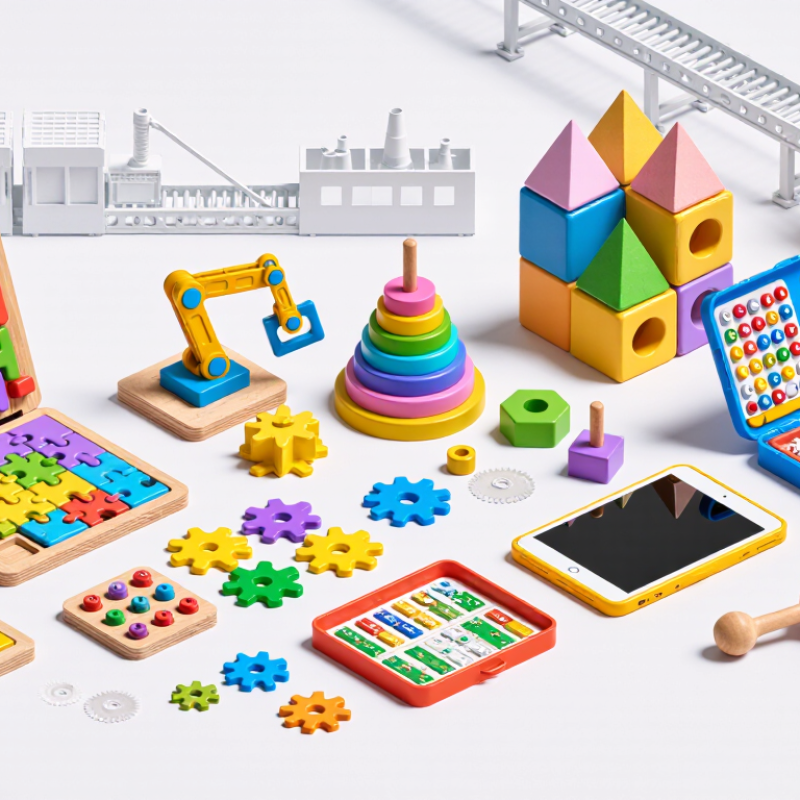
Types of Kids Learning Toys Made in China
What Are the Best Kids Learning Toys from China?
China produces many types of kids learning toys, from wooden puzzles to electronic science kits. Building blocks support spatial thinking, balance, and early engineering skills. Shape sorters help younger children practice colors, matching, and hand control. Magnetic tiles can encourage open-ended construction, although adults should check every piece carefully.
Simple puzzles suit quiet learning at home. Role-play sets develop language, cooperation, and everyday problem-solving. Counting toys, alphabet boards, and pattern games strengthen early academic skills without making practice feel like homework. Sensory toys, such as textured boards or modeling materials, can support focus and fine motor development. The best choice depends on a child’s age, interests, and patience level.
Tips: Check age guidance, material information, and test reports before purchasing. Look for smooth edges, secure parts, clear instructions, and durable packaging. In my experience, a toy that survives repeated use offers better learning value than a complicated toy used once. I have also seen attractive kits with unclear instructions, so product details deserve close attention. This is not always easy to judge online. Ask suppliers about quality inspections, sample testing, and replacement support. Supervision remains important, especially with small components.
What Are the Best Kids Learning Toys from China? - Types of Kids Learning Toys Made in China
| Toy Type | Typical Age | Primary Learning Benefits | Common Materials | Typical Product Formats Made in China | Key Safety Checkpoints |
|---|---|---|---|---|---|
| Wooden Shape Sorters | 12 months–3 years | Shape recognition, color matching, hand-eye coordination, and early problem-solving | Solid wood, plywood, water-based paint, and non-toxic coatings | Peg puzzles, cube sorters, stacking boards, and posting boxes | Smooth edges, secure components, paint adhesion, and age-appropriate piece size |
| Building Blocks and Construction Sets | 3–8 years | Spatial reasoning, creativity, planning, fine motor skills, and basic engineering concepts | ABS plastic, polypropylene, wood, or silicone | Interlocking bricks, magnetic construction pieces, gears, and connector sets | Magnet strength and enclosure, impact resistance, sharp-edge testing, and small-part warnings |
| Early Learning Flash Cards | 2–6 years | Vocabulary, memory, visual recognition, pronunciation, and early literacy | Coated paperboard, laminated card stock, and water-based inks | Alphabet cards, number cards, picture cards, and bilingual vocabulary sets | Tear resistance, non-toxic printing inks, rounded corners, and clear age labeling |
| Montessori-Inspired Practical Life Toys | 2–6 years | Independence, concentration, sequencing, coordination, and everyday-life skills | Wood, stainless steel, cotton fabric, and food-contact-grade silicone where applicable | Lacing frames, dressing boards, pouring sets, sorting trays, and buttoning boards | Secure fasteners, splinter-free surfaces, washable materials, and supervised use of small accessories |
| STEM Experiment Kits | 6–12 years | Scientific observation, measurement, hypothesis testing, and cause-and-effect reasoning | Plastic components, paper instructions, magnets, measuring tools, and non-hazardous activity materials | Magnetism, circuits, robotics, crystal-growing, and simple physics kits | Clear instructions, electrical insulation, chemical safety labeling, protective equipment, and adult supervision requirements |
| Electronic Learning Toys | 3–8 years | Letter and number recognition, auditory memory, language practice, and interactive problem-solving | ABS plastic, silicone buttons, printed circuit boards, speakers, and rechargeable or replaceable batteries | Talking books, learning tablets, electronic puzzles, and interactive quiz boards | Battery-compartment security, volume limits, charging protection, EMC testing, and data-privacy review for connected products |
| Jigsaw and Logic Puzzles | 3–10 years | Visual discrimination, patience, logical thinking, memory, and fine motor development | Paperboard, wood, foam, or durable plastic | Floor puzzles, knob puzzles, tangrams, maze boards, and sequential logic games | Piece size, edge quality, print durability, choking-risk labeling, and structural strength |
| Art and Craft Learning Sets | 3–12 years | Creativity, visual expression, color theory, hand control, and sensory exploration | Washable crayons, water-based paints, paper, clay, fabric, and child-safe plastic tools | Drawing kits, modeling-clay sets, paper-craft kits, stamping sets, and bead-free collage kits | Non-toxic formulation, washable ingredients, tool-tip safety, allergen information, and supervision for small parts |
| Role-Play and Pretend-Play Sets | 3–8 years | Communication, social interaction, storytelling, emotional development, and practical vocabulary | Plastic, wood, fabric, cardboard, and soft foam | Kitchen sets, doctor kits, market sets, tool sets, and community-helper costumes | Non-functional imitation parts, secure handles, flame-resistant costume materials where required, and choking-risk assessment |
| Balance and Gross-Motor Toys | 2–8 years | Balance, body awareness, coordination, strength, and gross-motor confidence | High-density polyethylene, polypropylene, rubber, foam, and wood | Stepping stones, balance boards, indoor climbing pieces, tunnels, and activity arches | Weight limits, stability, load testing, non-slip surfaces, rounded edges, and appropriate use-space guidance |
Purchasing note: Product quality varies by manufacturer and production batch. Buyers should verify current test reports and applicable requirements, such as EN 71, ASTM F963, CPSIA, or other destination-market regulations, before placing an order.
FAQS
Choose chunky puzzles, nesting cups, and large wooden beads. They support language, movement, counting, and hand control. Name colors and actions during play. Avoid loose magnets and tiny parts.
Read the age label carefully. Check for secure parts, smooth surfaces, and clear warnings. “Educational” does not always mean suitable. Supervision still matters.
Construction sets, pretend-play kits, pattern cards, and beginner science toys work well. They encourage planning, storytelling, cooperation, and early mathematics. Sorting buttons by size can become a small lesson.
Request material details, current safety reports, and batch information. Reports should match the exact product and production site. Ask for independent samples when possible. Factory promises alone are weak evidence.
Check age grading, small-part warnings, sharp edges, magnets, batteries, and paint coatings. The toy should survive drops, pulling, and repeated cleaning. Missing traceability information is a warning sign.
Try puzzles, coding boards, model-building kits, and experiment sets. Open-ended designs allow several solutions. A child can rebuild a model after failure. Small components and tools require supervision.
Watch whether children sort, build, pretend, draw, or solve problems independently. Notice if the toy encourages conversation. A simple puzzle may teach more than flashing lights. I sometimes overvalue attractive packaging.
Match the toy with the child’s current skills. Add difficulty gradually. Difficult toys may be abandoned quickly. That is worth noticing. Learning value alone is not enough.
Conclusion
China offers a wide range of kids learning toys designed to support creativity, problem-solving, language development, motor skills, and early STEM learning. Common categories include building sets, puzzles, educational games, science kits, art materials, sensory toys, musical toys, and role-play products. The best choice depends on a child’s age and developmental stage: younger children benefit from colorful, easy-to-handle toys that build coordination and recognition, while older children may need more challenging activities that encourage logic, teamwork, imagination, and independent thinking.
When evaluating Chinese-made toys, parents and buyers should consider material safety, sturdy construction, age-appropriate design, clear instructions, and meaningful educational value. It is also important to assess whether a product matches a specific learning goal rather than relying only on appearance. For businesses sourcing from China, reliable suppliers should provide consistent quality, transparent production information, sample testing, responsive communication, and suitable safety documentation. Careful comparison of product design, customization options, packaging, and delivery reliability can help ensure a safe and worthwhile learning experience.