Buying STEM toys across borders requires more than colorful packaging and a low wholesale price. Global buyers must examine learning value, product safety, durability, and cultural fit. A robotics kit may look impressive, yet its small parts could frustrate younger children. A science set may promise discovery, but unclear instructions can leave families confused. Practical evaluation matters.
Dr. Marina Umaschi Bers, a professor and expert in children’s educational technology, has said, “Coding is the new literacy.” Her view highlights an important buying principle: STEM toys should help children create, test, and solve problems. They should not merely produce lights or sounds. Buyers should inspect age grading, materials, battery design, privacy features, and testing documentation. They should also check whether instructions are translated clearly for each target market. Small details matter.
Consider the full customer journey. Can a child open the kit without excessive adult help? Can teachers reuse the components after one classroom project? Will replacement parts remain available next year? These questions reveal product quality more honestly than marketing claims. Certification requirements also differ between regions, so professional verification is essential. Never assume one approval covers every destination.
There is no perfect toy. Even a well-designed kit may be too difficult for some learners. That weakness deserves attention, not concealment. The strongest purchasing decision balances educational purpose, safe design, reliable supply, and genuine play value. For global buyers, thoughtful comparison creates fewer returns and better learning experiences.
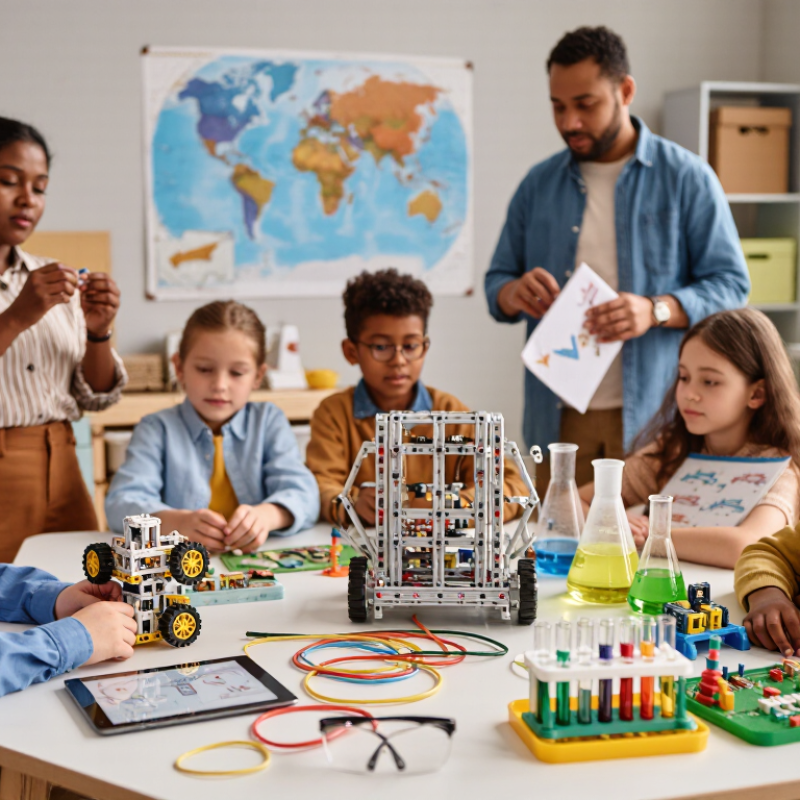
Define STEM Learning Goals Across Science, Technology, Engineering, and Math
10 STEM Toys Buying Tips for Global Buyers
Define the learning goal before comparing features. A science toy should encourage observation, testing, and evidence-based questions. A technology toy may develop coding logic, digital design, or responsible problem-solving. Engineering activities should involve planning, building, failure, and revision. Mathematics toys can strengthen measurement, patterns, probability, or spatial reasoning.
The World Economic Forum’s Future of Jobs Report 2023 identifies analytical thinking as a leading core workplace skill. It also estimates that 44% of workers’ skills may be disrupted by 2027. These figures support toys that require children to explain decisions, not merely press buttons. In my product reviews, open-ended kits usually create richer discussion than single-answer activities. Still, “more parts” does not always mean deeper learning. That assumption deserves testing.
Tip: Match one toy with one measurable goal. For example, ask children to build a bridge supporting 500 grams, then record each design change. Check age guidance, instructions, language access, and replacement-part availability across markets. Confirm that materials, batteries, and electrical components meet the destination market’s safety requirements. Ask whether adults can observe progress without taking control. A small mistake can be valuable, but unclear instructions can turn it into frustration. The OECD’s PISA 2022 results also show continuing mathematics challenges among students, reminding buyers to value patient, practical learning over flashy entertainment.
FAQS
Cameras, microphones, location settings, and child profiles may collect personal information. Check every permission request. Voice recording counts too.
Read the privacy notice and consent process. Check account requirements, storage locations, deletion options, and service providers. Plain explanations are better.
Test this before purchase. Offline access is preferable when possible. A required account may increase privacy concerns.
Scan the setup QR code first. Disable optional microphone, camera, or location access. Do not activate features the child will not use.
Children younger than 18 months generally need no routine screen media. Children aged two to five generally need limited daily screen time. Follow local pediatric guidance.
Bright graphics do not prove learning. Compare app time with sleep, conversation, drawing, and hands-on building. Set a visible timer.
Request the battery model, test report, date, and laboratory details. Also ask for transport safety evidence when shipping lithium batteries. A certificate alone may be incomplete.
Check secure wiring, insulated terminals, firm connectors, and a protected charging port. Confirm overcharge and overheating controls. Test charging after repeated use.
No. Local electrical, toy, labeling, recycling, and charger rules may still apply. The tested battery must match the installed battery.
Compare production samples, serial records, supplier change notices, and test results. Polished documents can hide practical gaps. That deserves attention.
Conclusion
Choosing STEM toys for global markets requires more than evaluating how entertaining they are. Buyers should first define the intended learning goals across science, technology, engineering, and mathematics, then assess whether each toy supports meaningful, age-appropriate exploration. Safety verification is equally important: products should be tested against ASTM F963-23, EN 71, and the CPSIA limit of 100 ppm for lead in applicable materials. Clear instructions, durable construction, and reliable quality controls can further reduce potential risks during use.
For toys with apps, cameras, connected functions, or online services, buyers should review data practices and confirm that features are designed to meet COPPA requirements for children under 13. Age suitability should also reflect AAP screen-time guidance, especially for young children who benefit from hands-on play and limited digital exposure. Finally, battery-powered products should be evaluated for compliance with IEC 62133-2 requirements, including protection against overheating, short circuits, and other battery-related hazards. These checks help buyers select safe, educational, and internationally suitable STEM toys.